

How Long To Pressure Cook Peaches
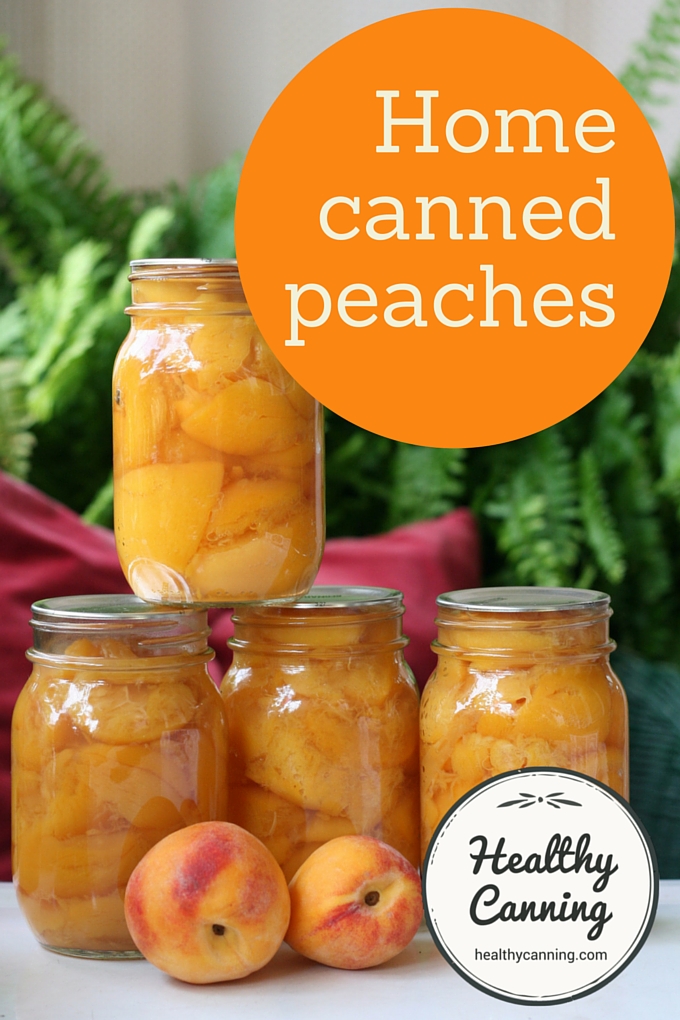
Home canned peaches are jars of golden summer sunshine on the coldest, darkest winter days.
And they have none of the tinny taste that store canned peaches in tins do.
Jars of these are useful for quick desserts. They are also great for eating as is, drained, with a dollop of yoghurt on them in a bowl.
This method is for yellow-fleshed peaches only. Freeze white-fleshed peaches, as they are lower in acid. See caution about canning white peaches below.
For the canning liquid, you can use water, juice or a sugar-syrup. Below we given directions for canning them plain in just water, which gives maximum flexibility for usage upon opening.
- 1 Quantities of peaches needed
- 2 The recipe
- 3 Canning peaches
- 3.1 Ingredients
- 3.2 Instructions
- 4 Recipe notes
- 5 Raw pack method
- 6 Pressure canning process
- 7 Canning peaches as halves
- 8 Jazz up your home canned peaches
- 9 Freestone vs clingstone peaches
- 10 Acidity of yellow-fleshed peaches
- 11 Caution about white-fleshed peaches
- 12 Reality check
- 13 Reference information
- 14 Recipe Source
- 15 Nutrition
- 16 Cooking with canning recipes
Quantities of peaches needed
Numbers are approximate guidelines.
On average, as a very rough guideline, expect to need about 1 kg (2.5 lbs) of peaches per 1 litre (US quart) jar of canned peach pieces.
- 8 (17.5 lbs) of whole peaches = 7 litres (US quarts) canned peach pieces
- 5 kg (11 lbs ) of whole peaches = 9 x ½ litres (US pints) canned peach pieces
- 1 US bushel peaches = 22 kg (48 lbs) = 16 to 24 litres (US quarts) canned peach pieces
1 dry litre / quart peaches = 500 g (1 lb) peaches = 3 medium-sized peaches = 2-¾ to 3 cups sliced = 2-¼ cups chopped = 2 cups pureed
3 litre / quart basket peaches = approximately 12 to 14 medium peaches = 1.5 kg (3.5 lbs)
2 medium Peaches = 1 cup sliced
1 half-litre (US pint) jar home canned peaches, drained = 400 g (1 ¾ cups / 14 oz)
The recipe
Jar size choices: Either half-litre (1 US pint) OR 1 litre (1 US quart)
Processing method: Water bath or steam canning or pressure canning
Yield: varies
Headspace: 2 cm (½ inch)
Processing time: Half-litres (pints) 20 minutes; litres (quarts) 25 minutes
Note that because we are doing here the USDA's sugar-free option, we must use the hot pack method. If you are using a sugar-syrup, they do give the option of a raw-pack (see below).
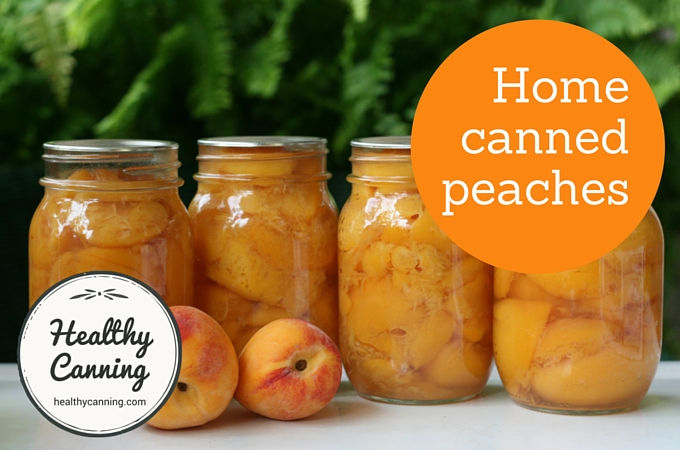
Canning peaches
How to safely home can peaches, following tested USDA methods
Prep Time 2 hours
Cook Time 1 hour
Total Time 1 hour
Yield 1 varies
Calories 78 kcal
- peaches
- water
-
Put a largish pot of water on to boil.
-
Prepare a very large pot or bowl of water that has been acidulated (by adding lemon juice or ascorbic acid.)
-
Wash the peaches, and dip them in the pot of boiling water for about a minute, until the skins loosen.
-
Then dip in cold water, peel the skin off, remove pit, and cut peach flesh into slices if you wish, or leave in halves.
-
Put in your bowl of acidulated water.
-
Continue until all your peaches are prepped.
-
When done, place peach slices / pieces in a large pot of clean water with enough water to cover them.
-
Bring this pot to a boil.
-
When it is boiling, the peaches will have been heated enough for packing. Don't cook them.
-
Pack peach pieces / slices / halves into jars.
-
Leave 3 cm (1 inch) headspace.
-
Top up with the water you boiled them in from the pot or if there isn't enough, clean boiling water (such as from a kettle, for instance).
-
Leave 2 cm (½ inch) headspace after being filled with liquid.
-
Debubble, adjust headspace.
-
Wipe jar rims.
-
Put lids on.
-
Process in a water bath or steam canner.
-
Process ½ litre (US pint) jars for 20 minutes; litre (US quart) jars for 25 minutes. Increase time as needed for your altitude.
| Required processing time in minutes per altitude | ||||
|---|---|---|---|---|
| Jar Size | 0 - 300 m / 0 - 1,000 ft | 301 - 900 m / 1,001 - 3,000 ft | 901 - 1,800 m / 3,001 - 6,000 ft | Above 1,800 m / 6,000 ft |
| ½ litre (US pint) | 20 min | 25 min | 30 min | 35 min |
| 1 litre (US quart) | 25 min | 30 min | 35 min | 40 min |
Recipe notes
For the canning liquid, you could also use apple juice or white grape juice. Heat your peaches up before packing in that instead of the plain water. Note that juice can be more expensive, though.
If you are canning in water and want a bit of sweetener, you could use ¼ to ½ teaspoon of liquid stevia per half-litre / pint jar.
Have a few cloths handy to wipe up the counters and floors. If you are doing a lot, don't be surprised if you end up with a lot of sticky juice everywhere!
Raw pack method
The USDA also offers a raw-pack method for packing peaches unheated into a jar. While the raw pack method is safe, the USDA advises that the quality of the end product may be poor.
Ball / Bernardin Complete says, "Fruits such as peaches naturally trap an abundance of air in their juicy cell structure. Hot-packing heats the fruit to exhaust some of this air prior to packing and thus helps to prevent fruit shrinkage and floating upward in the jar during and after processing. Thus, for peaches, hot-packing is the preferred method." [1] Kingry, Judi and Lauren Devine. Ball / Bernardin Complete Book of Home Preserving. Toronto: Robert Rose. 2015. Page 150.
If you are canning your peaches sugar free, using water or juice as your canning liquid, most experts advise you definitely to use hot-pack. The Ball / Bernardin Complete Book says, "If you're preserving fruits using fruit juice or water…you must use the hot-pack method." [2] Kingry, Judi and Lauren Devine. Ball / Bernardin Complete Book of Home Preserving. Toronto: Robert Rose. 2015. Page 143.
In fact, even if you are canning your peaches with sugar, the Ball / Bernardin Complete still tries to persuade you to go hot-pack, though they do admit that raw-pack is acceptable if you are using sugar.
Note that you don't really save much time doing raw pack, because you still have to heat the canning liquid, anyway, and, raw pack jars must be processed longer (5 minutes longer for each jar size, at each altitude zone).
See here for the USDA's raw pack processing times for peaches.
Pressure canning process
The USDA also offers a pressure canning process for either the hot-pack or raw-pack method See here for pressure-canning peaches directions.
Canning peaches as halves
The Ball Blue Book gives precise directions for packing if you have prepared your peaches as halves: "Pack hot peaches, cavity side down and layers overlapping." (Ball Blue Book. Muncie, Indiana: Healthmark LLC / Jarden Home Brands. Edition 37. 2014. Page 25.)
Jazz up your home canned peaches
Home canned peaches with some alcohol added to them can make nice gifts.
Per ½ litre (US pint) jar try adding either: 1 tablespoon of rum or brandy, OR ½ tablespoon of Dubonnet or peach schnapps. (Source: Ball / Bernardin Complete.) [3] Kingry, Judi and Lauren Devine. Ball / Bernardin Complete Book of Home Preserving. Toronto: Robert Rose. 2015. Page 155.
Freestone vs clingstone peaches
"Stone" refers to the pit in the centre of the peaches. Clingstone means that the fruit flesh clings tightly to the pit; freestone means that the flesh separates easily.
In practice, the flesh of freestone peaches can also be difficult to separate from the pit.
Some people prefer clingstone peaches for canning because they feel that the clingstone peaches can up firmer.
Either way, be prepared for a bit of work. Getting the centre pit out is not as easy as it seems it might be, even with freestone.
Acidity of yellow-fleshed peaches
High-acid for home canning is defined as having a pH of less than 4.6. With a pH of 3.30 – 4.05, yellow-fleshed peaches are classed as a high-acid fruit. [4] FDA. Approximate pH of Foods and Food Products. April 2007. Accessed August 2017 at https://www.vldhealth.org/pdf/environmentalPDF/foodPH2007.pdf
This lets them be safely canned on their own, plain, as is.
Caution about white-fleshed peaches
In June 2018, the National Center for Home Food Preservation added this caution to its preamble for the USDA canning method:
Do not use this process to can white-flesh peaches. There is evidence that some varieties of white-flesh peaches are higher in pH (i.e., lower in acid) than traditional yellow varieties. The natural pH of some white peaches can exceed 4.6, making them a low-acid food for canning purposes. At this time there is no low-acid pressure process available for white-flesh peaches nor a researched acidification procedure for safe boiling water canning. Freezing is the recommended method of preserving white-flesh peaches." [5] Canning Peaches. National Center for Home Food Preservation. Accessed June 2018 athttps://nchfp.uga.edu/how/can_02/peach_sliced.html
Reality check
Canning peaches in any quantity is a lot of sticky, tedious work. And for every 2 kgs (5 lbs) of peaches, you may only get 4 half-litre (pint) jars.
The work is easiest if your peaches are perfectly ripe. To know if a peach is ripe, press your thumb into it. If you can make an indent that lasts, chances are it is ripe. If a peach is perfectly ripe, it will be easier to peel, and to pit.
The problem is, not all the peaches in that big box you bought are going to be the same degree of ripeness. So some will be frustrating to peel, and pit. If you wait till every last one is ripe first, then the ones that were already ripe may start going mouldy on you — and when that starts, they will all go mouldy, fast.
And, as you pit the peaches, be prepared for peach juice running everywhere. Keep your canning book out of reach so its pages don't get glued shut with sticky peach juice, and be prepared to mop up juice from your work area as you go.
Reference information
How to water bath process.
How to steam can.
When water-bath canning or steam canning, you must adjust the processing time for your altitude.
How to pressure can.
When pressure canning, you must adjust the pressure for your altitude.
More information about home-canning fruit sugar free in general.
Recipe Source
Peaches, halved or sliced. In: United States Department of Agriculture (USDA). Complete guide to home canning. Agriculture information bulletin No. 539. 2015. Page 2-19.
Peaches. In: Andress, Elizabeth L. and Judy A. Harrison. So Easy to Preserve. University of Georgia Cooperative Extension. Bulletin 989. Sixth Edition. 2014. Page 49.
Modifications made:
- None
Nutrition
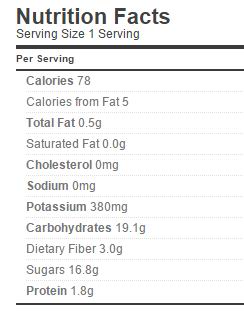
Nutrition figures presume canned in water, as opposed to a sugar-syrup, or juice. Liquid stevia in the water would not affect nutritional values.
Per 200 g (7 oz. About ½ of a drained ½ litre / US pint jar):
- 78 calories, 0 mg sodium
- Weight Watchers PointsPlus®: 0 points (peaches with no additives are free on Weight Watchers.)
* Nutrition info provided by https://caloriecount.about.com
* PointsPlus™ calculated by healthycanning.com. Not endorsed by Weight Watchers® International, Inc, which is the owner of the PointsPlus® registered trademark.
Cooking with canning recipes
For fruitier pies, add to a jar of Canned Peach Pie Filling when making a pie.
Peach Maple Walnut Crumble
Peach Salsa
How Long To Pressure Cook Peaches
Source: https://www.healthycanning.com/canning-peaches
Posted by: onowhortere.blogspot.com
0 Response to "How Long To Pressure Cook Peaches"
Post a Comment